How I always hope my day will go:
7.30am: Get up, get ready.
8.00: Drive to house of person who I car pool with, train hawk while he gets ready.
8.30: Leave for uni.
9.00: Arrive at uni. Work on PhD all day with an hour for lunch and 10 min breaks between hours.
5pm: Leave uni, tired and satisfied.
5.30: Arrive back at home, work on lectures, collaboration or read something about science. Alternatively do something hobbyish.
10.00: Go to bed.
10.30: Be asleep.
How my day usually goes:
7.30am: Get up, get ready.
8.00: Drive to car pooling person's house, drag out of bed and convince to go to uni (he lost enthusiasm long ago), train hawk, lose track of time.
9.00: Leave for uni.
9.30: Arrive at uni; make cup of tea.
9.45: Check emails, respond to them, check facebook, learn about something that is as interesting as it is irrelevant to my study.
10.00: Beat self up for not working. Make another cup of tea.
10.15: Meet someone in the hallway and chat. Remember I have to talk to someone else as well.
10.45: Realise time and beat self up for not working. Make another cup of tea.
11.00: Do a bit of work.
12.00: Lunch starts.
1pm: Friend wants to catch up, has crisis/exciting news/is visiting town and will be gone tomorrow.
2.00: Check email and facebook, realise the time and beat self up for not working.
2.15: Do a bit of work. Panic about how much I have to do and the prospect of falling behind. Welcome interruptions from people. Complain to them that I'm not working enough and they tell me they are also unproductive. Must be weather/ time of day/ day of week/ time of year.
4.00: Depressed at lack of progress. Procrastinate with anything.
5.00: Decide to leave uni and work at home.
5.30: Make dinner.
6.00: Flatmate gets home. Chat, eat, watch TV series.
10.00: Go to bed.
10.30: Realise how much of today was wasted. Beat self up for not working. Panic about falling behind. Try to work out where today went wrong. Recite priorities. Resolve to do better tomorrow. Work out what I will do tomorrow, exactly.
12.00: Fall asleep.
NB: There are always a few of these days, then one super productive day. Apparently this is normal. Why? I like my work. Why do I avoid it so much? I think because it is labelled as work, and everyone hates work.

Sunday, 30 August 2015

Tuesday, 18 August 2015
Fear and phobia
A phobia is an anxiety disorder characterised by intense, irrational fear. A very common one is arachnophobia: fear of arachnids (usually spiders). Some self-proclaimed arachnophobes are just silly. A fear of spiders can be used to get attention. Young children are common examples of this, and you can just tell them that they're not scared or say that only silly people are scared of spiders, and their fear is cured. Others are much worse, and the fear can take over their lives and change their personalities.
Phobias, and other anxiety disorders, are medical conditions and can be treated. But for some reason, people with arachnophobia tend not to think there is anything wrong with them, and they just live with their fear. Possibly the high prevalence of arachnophobia and general acceptance of it within society is to blame, but that doesn't stop people going to the doctor for antibiotics every time they get a cold or sore throat.
But if you have a phobia, you need to get it treated. Fear is controlling, and phobias can make you avoid situations that you would otherwise enjoy or benefit from. As a sufferer, you don't always realise what you are missing, but when the phobia has been treated a whole world of possibilities suddenly becomes realised.
Fear is such an intense reaction. Telling someone to stop being silly, or that there's nothing to worry about, doesn't work because fear doesn't respond to logic (otherwise it wouldn't be irrational). There are different ways of treating phobias, and I'm not a psychologist, but I have experienced some of them. If you have a phobia, go to your GP and say that it's getting in the way and you want it gone. Hopefully they will refer you to a counsellor or psychologist.
For about ten years, I had two phobias: vomiting and crowds. The crowd phobia was cured entirely by exposure: I got a job fund raising in shopping centres and hid behind the display table until I managed to brave the crowds for longer and longer periods of time. The vomiting phobia came about because I had underlying anxieties making me feel sick all the time, and I was always worried that one day it would come to fruition. I took anti-emetics, avoided children like the plague, never drank alcohol and stayed away from people who did. It got so bad that when my friends started drinking, I would run away to a dangerous place where they would not follow (even drunk people can have a sense of self-preservation). I got some treatment, mostly cognitive behavioural therapy (CBT) (break the cycle of avoidance behaviour you got yourself into), but also trying out "tapping into the brain" which is based on neurolinguistic programming. It works for people who get travel sick and respond well to placebos (which is a lot of people who get travel sick). It didn't work for me.
CBT worked pretty well for me, but the psychologist was very wise and very Glaswegian, and he would say things that stuck with me. Quotes from Mark Twain about worrying thousands of times during your life but hardly any of the things you worry about come to pass. Reminders that, no matter how intense the nausea, it will pass. I began repeating these mantras every time I felt sick rather than taking pills. I began looking forward to the time in the future when I wouldn't feel sick. Eventually, I stopped feeling sick. For some reason, the travel sickness that I developed (after 15 years of life with the strongest stomach imagineable) stuck, but I can now be around people who are drinking and eating dodgy food without worrying too much. Which means I can attend parties (though I still don't understand them). I can share a car with someone who gets carsick without leaving and deciding to walk the remaining 250 km but don't worry, I don't mind, I like walking...
With the loss of emetophobia came the rise of another phobia: claustrophobia. Any small, enclosed space, particularly if it was warm, would make me panic. It developed one night when I was trapped inside a tent in a hot, humid place. I got flashbacks of a time when I was trapped inside a car on a hot day when I was too young to understand car locking mechanisms, and the two knotted and formed a phobia. I came to NZ with this phobia, and some other ones as well (some people get moles, I get phobias, ok?). My GP referred me to a psychologist, and she treated all the underlying things that people accumulate from when they're young due to the fact that this world is hard to live in, and people can make it even harder. I understood where the fears came from, and how they worked, and that helped me deal with them. I made an anxiety ladder, each rung slightly more frightening, and exposed myself more and more to the situations which made me nervous (ranging from telephone conversations to eating in front of people). It worked really well.
So, if you are frightened of spiders or children or revolving doors or music or art, you can probably cure it very simply by exposing yourself to it (read about spiders! They are really fascinating, like music and art!). Or, if that doesn't work, get some treatment! You may be able to get it free or subsidised, and it makes life really wonderful to have a phobia lifted.
Phobias, and other anxiety disorders, are medical conditions and can be treated. But for some reason, people with arachnophobia tend not to think there is anything wrong with them, and they just live with their fear. Possibly the high prevalence of arachnophobia and general acceptance of it within society is to blame, but that doesn't stop people going to the doctor for antibiotics every time they get a cold or sore throat.
But if you have a phobia, you need to get it treated. Fear is controlling, and phobias can make you avoid situations that you would otherwise enjoy or benefit from. As a sufferer, you don't always realise what you are missing, but when the phobia has been treated a whole world of possibilities suddenly becomes realised.
Fear is such an intense reaction. Telling someone to stop being silly, or that there's nothing to worry about, doesn't work because fear doesn't respond to logic (otherwise it wouldn't be irrational). There are different ways of treating phobias, and I'm not a psychologist, but I have experienced some of them. If you have a phobia, go to your GP and say that it's getting in the way and you want it gone. Hopefully they will refer you to a counsellor or psychologist.
For about ten years, I had two phobias: vomiting and crowds. The crowd phobia was cured entirely by exposure: I got a job fund raising in shopping centres and hid behind the display table until I managed to brave the crowds for longer and longer periods of time. The vomiting phobia came about because I had underlying anxieties making me feel sick all the time, and I was always worried that one day it would come to fruition. I took anti-emetics, avoided children like the plague, never drank alcohol and stayed away from people who did. It got so bad that when my friends started drinking, I would run away to a dangerous place where they would not follow (even drunk people can have a sense of self-preservation). I got some treatment, mostly cognitive behavioural therapy (CBT) (break the cycle of avoidance behaviour you got yourself into), but also trying out "tapping into the brain" which is based on neurolinguistic programming. It works for people who get travel sick and respond well to placebos (which is a lot of people who get travel sick). It didn't work for me.
CBT worked pretty well for me, but the psychologist was very wise and very Glaswegian, and he would say things that stuck with me. Quotes from Mark Twain about worrying thousands of times during your life but hardly any of the things you worry about come to pass. Reminders that, no matter how intense the nausea, it will pass. I began repeating these mantras every time I felt sick rather than taking pills. I began looking forward to the time in the future when I wouldn't feel sick. Eventually, I stopped feeling sick. For some reason, the travel sickness that I developed (after 15 years of life with the strongest stomach imagineable) stuck, but I can now be around people who are drinking and eating dodgy food without worrying too much. Which means I can attend parties (though I still don't understand them). I can share a car with someone who gets carsick without leaving and deciding to walk the remaining 250 km but don't worry, I don't mind, I like walking...
With the loss of emetophobia came the rise of another phobia: claustrophobia. Any small, enclosed space, particularly if it was warm, would make me panic. It developed one night when I was trapped inside a tent in a hot, humid place. I got flashbacks of a time when I was trapped inside a car on a hot day when I was too young to understand car locking mechanisms, and the two knotted and formed a phobia. I came to NZ with this phobia, and some other ones as well (some people get moles, I get phobias, ok?). My GP referred me to a psychologist, and she treated all the underlying things that people accumulate from when they're young due to the fact that this world is hard to live in, and people can make it even harder. I understood where the fears came from, and how they worked, and that helped me deal with them. I made an anxiety ladder, each rung slightly more frightening, and exposed myself more and more to the situations which made me nervous (ranging from telephone conversations to eating in front of people). It worked really well.
So, if you are frightened of spiders or children or revolving doors or music or art, you can probably cure it very simply by exposing yourself to it (read about spiders! They are really fascinating, like music and art!). Or, if that doesn't work, get some treatment! You may be able to get it free or subsidised, and it makes life really wonderful to have a phobia lifted.
Tuesday, 28 July 2015
All hail the God of PCR
At a particularly low moment in my PCR optimisation process, I created a shrine on top of a cupboard. It was dedicated to a god of PCR. I'm against the non-critical thinking that leads to religion and faith, so you can probably imagine how low I had to be to create a shrine. But I thought that if, despite all evidence and logic, there was a god of PCR...I had better start worshipping it.
Since then, everything has pretty much gone to plan. I have had more samples work than not work, and I've begun to assemble a pretty comprehensive tree of Cantuaria. It has mostly shown me that the current taxonomy of Cantuaria places them into different taxonomic groups (species, genus) than their genetics do. But there is still a bit of work to do with BEAST, the program I am using the build the trees.
I've decided that optimising the stubborn samples that I have left (which all seem to require completely different PCR conditions) would be a waste of time and money. I have enough for my tree, and it would be nice to get them all to work, but I was meant to have completed this six months ago. I've got three new genes to work with as well (thanks to a friend) which I'm going to use to create a different phylogeny with fewer samples, but more sequences per sample (an idea which I picked up from the Evolution conference). That is not going to involve optimisation, though. If stuff doesn't work, screw it, I'm out of there. I have more ecological fish to fry.
So, all that I have left to do in the lab is...
-extract DNA from the 43 remaining spiders that I have collected
-PCR for all three genes these 43 spiders
-CO1 PCR a few more samples
-PCR the new 3 genes (I'm aiming for 14 sequences - two from each major clade).
If the PCRs for the 43 remaining spiders don't work, I'll try adding BSA (a magic liquid extracted by squeezing cows), doing a gradient PCR, and using MyTaq, which was recommended to me by another person who studies the same family of spiders (but seems a little sensitive for most of my samples). But that is the limit to which I will go to make them work.
There is a light at the end of the tunnel. Wish me luck!
Since then, everything has pretty much gone to plan. I have had more samples work than not work, and I've begun to assemble a pretty comprehensive tree of Cantuaria. It has mostly shown me that the current taxonomy of Cantuaria places them into different taxonomic groups (species, genus) than their genetics do. But there is still a bit of work to do with BEAST, the program I am using the build the trees.
I've decided that optimising the stubborn samples that I have left (which all seem to require completely different PCR conditions) would be a waste of time and money. I have enough for my tree, and it would be nice to get them all to work, but I was meant to have completed this six months ago. I've got three new genes to work with as well (thanks to a friend) which I'm going to use to create a different phylogeny with fewer samples, but more sequences per sample (an idea which I picked up from the Evolution conference). That is not going to involve optimisation, though. If stuff doesn't work, screw it, I'm out of there. I have more ecological fish to fry.
So, all that I have left to do in the lab is...
-extract DNA from the 43 remaining spiders that I have collected
-PCR for all three genes these 43 spiders
-CO1 PCR a few more samples
-PCR the new 3 genes (I'm aiming for 14 sequences - two from each major clade).
If the PCRs for the 43 remaining spiders don't work, I'll try adding BSA (a magic liquid extracted by squeezing cows), doing a gradient PCR, and using MyTaq, which was recommended to me by another person who studies the same family of spiders (but seems a little sensitive for most of my samples). But that is the limit to which I will go to make them work.
There is a light at the end of the tunnel. Wish me luck!
Saturday, 4 July 2015
Evolution Conference, Brazil 2015
The perching birds (passerines) decided to have a conference to display their various adaptations. Nightingale went along to see what the other birds had been up to. However, when he got to the conference, he could not see any other nightingales; the only member of his family was a blue flycatcher, with his striking cobalt and rust plumage. In fact, none of the other passerines at the conference looked much like a nightingale at all. They all seemed to be brightly coloured.
Nightingale went to some of the displays the birds were giving. Most of them comprised dancing, or showing off their bright plumage; manakins were moonwalking and jumping up and down, birds of paradise made their usual elaborate displays, and other colourful species simply talked about how their attractive feathers helped them to find quality mates. Nightingale soon grew tired of their splendour, and wished his plumage was comparable.
At one of the mixers, Nightingale met a lyrebird. He was just as brown as Nightingale, but with long, elegant tailfeathers. "He's not so gaudy as the other lot," Nightingale said to himself. "He looks better than me, but he's still not quite there yet!" It made him feel a little better to see a brown bird. He wandered over to the lyrebird and bowed.
"Hello there," said the lyrebird. "I am Menura. What genus are you?"
"I'm Luscinia," said Nightingale. "I specialise in song," he added.
"Oh, a songster!" said Lyrebird, obviously elated. "Fantastic! There's only you, me, and Songthrush over there."
Nightingale went to Songthrush's display, and was comforted: the thrush's song was not nearly as beautiful as his own. But when he went to see Lyrebird's session, Nightingale's heart sank: the lyrebird began with a lilting melody, then incorporated beautiful and exotic sounds from the human world, and finished by imitating every bird that had come to watch him.
Nightingale was so flustered that he wanted to leave the conference. He felt so inadequate that he didn't look where he was going, and bumped into a sparrow on the way out.
"What's wrong?" asked the sparrow, her face full of concern.
"Oh, I'm supposed to be a passerine, but I can't possibly compare to the others with their bright feathers and wonderful dances - even the dull ones can sing better than I can!" Nightingale sobbed.
"Ha! Those posers," said the sparrows. "Don't believe for a minute that you need bright colours and gaudy displays to succeed as a passerine. Sure, they work for those who use them, but you won't catch us growing sparkly feathers - we'd just get eaten!"
More and more sparrows began to crowd around the poor, crying Nightingale. They offered him tissues, and one put his wing around Nightingale's shoulders. "There are so many of you," Nightingale gasped.
"Yes! We're one of the world's most successful families of bird. We have colonised every continent except for Antarctica, although we've had a bit of help from the humans," said a sparrow.
"But...you're so dull coloured!" Nightingale said.
"Success isn't much to do with how bright your plumage is," said another sparrow. "It's more to do with your biology as a whole. If you've got a good well-rounded ability to adapt and survive, you'll do well, young nightingale, and have a brilliant future!"
One by one, the sparrows went back into the conference, focusing on displays of behaviour and foraging rather than the showy displays that Nightingale had been going to. Nightingale followed the sparrows, learning about their natural history, and took home plenty of ideas about how his lineage might adapt to the challenges of the future.
Nightingale went to some of the displays the birds were giving. Most of them comprised dancing, or showing off their bright plumage; manakins were moonwalking and jumping up and down, birds of paradise made their usual elaborate displays, and other colourful species simply talked about how their attractive feathers helped them to find quality mates. Nightingale soon grew tired of their splendour, and wished his plumage was comparable.
At one of the mixers, Nightingale met a lyrebird. He was just as brown as Nightingale, but with long, elegant tailfeathers. "He's not so gaudy as the other lot," Nightingale said to himself. "He looks better than me, but he's still not quite there yet!" It made him feel a little better to see a brown bird. He wandered over to the lyrebird and bowed.
"Hello there," said the lyrebird. "I am Menura. What genus are you?"
"I'm Luscinia," said Nightingale. "I specialise in song," he added.
"Oh, a songster!" said Lyrebird, obviously elated. "Fantastic! There's only you, me, and Songthrush over there."
Nightingale went to Songthrush's display, and was comforted: the thrush's song was not nearly as beautiful as his own. But when he went to see Lyrebird's session, Nightingale's heart sank: the lyrebird began with a lilting melody, then incorporated beautiful and exotic sounds from the human world, and finished by imitating every bird that had come to watch him.
Nightingale was so flustered that he wanted to leave the conference. He felt so inadequate that he didn't look where he was going, and bumped into a sparrow on the way out.
"What's wrong?" asked the sparrow, her face full of concern.
"Oh, I'm supposed to be a passerine, but I can't possibly compare to the others with their bright feathers and wonderful dances - even the dull ones can sing better than I can!" Nightingale sobbed.
"Ha! Those posers," said the sparrows. "Don't believe for a minute that you need bright colours and gaudy displays to succeed as a passerine. Sure, they work for those who use them, but you won't catch us growing sparkly feathers - we'd just get eaten!"
More and more sparrows began to crowd around the poor, crying Nightingale. They offered him tissues, and one put his wing around Nightingale's shoulders. "There are so many of you," Nightingale gasped.
"Yes! We're one of the world's most successful families of bird. We have colonised every continent except for Antarctica, although we've had a bit of help from the humans," said a sparrow.
"But...you're so dull coloured!" Nightingale said.
"Success isn't much to do with how bright your plumage is," said another sparrow. "It's more to do with your biology as a whole. If you've got a good well-rounded ability to adapt and survive, you'll do well, young nightingale, and have a brilliant future!"
One by one, the sparrows went back into the conference, focusing on displays of behaviour and foraging rather than the showy displays that Nightingale had been going to. Nightingale followed the sparrows, learning about their natural history, and took home plenty of ideas about how his lineage might adapt to the challenges of the future.
 |
| Bird phylogeny by Jetz et al. (2012, Nature). Species within the black line are passerines. |
Monday, 18 May 2015
18-month(ish) report
I submitted my 18-month report a while ago, and the other day I had my 18-month review (although it has actually been 19 months). The review is there for a few reasons, but it particularly serves to identify major problems in time to solve them, and to scare the student into working if they haven't already started. You give a brief presentation, and then your supervisors and an assessor discuss your findings so far, and your assessor asks lots of questions, and they identify concerns. If you're in a really bad state in your project, they can supposedly kick you off it, but I think this is a story told by supervisors to young students to scare them into being good. I've only heard of people who have heard of people who have been kicked out. That said, as a graduate student you shouldn't need to rely on your supervisor to kick your arse into gear. You should be disciplining and organising yourself by now. That is what I tell myself all the time, anyway.
My report went OK, but the assessor had a lot of questions. That's fine really, because they don't know my project that well, but she raised some concerns that I thought were just interesting things. Like the fact that Cantuaria molecular data and morphological data say completely different things. I have the equivalent of two identical-looking lions, but their DNA says one is a tiger, and I also have a tiger and a lion that have DNA so similar that they might as well both be tigers. I thought that was quite interesting, and a nice illustration of how morphology and genetics don't always agree on how a phylogeny should look. It also means lots to work on with regards to taxonomy, which is great because I have special funding for taxonomy alone. But my assessor said it is a massive problem, and I need to find males to back it up (which I am looking for but cannot find!), and it is going to get in the way of landscape genetics. I'm not really sure that it is though, because I am not basing any of my inferences on morphology - just genetics - and I have always been working under the impression that the morphology will be misleading. I just hadn't reckoned with how misleading it would really be.
Overall though, my main supervisor says it went well. I need to get more sequences and more funding for tuition fees, but I have enough work for a PhD and it is meant to have challenges and be hard. I can keep going. They all gave me some useful pointers about landscape genetics to look into. More on that when I get to that part of my PhD. For now, I must continue to try and get rid of this inhibitor problem that I am having!
My report went OK, but the assessor had a lot of questions. That's fine really, because they don't know my project that well, but she raised some concerns that I thought were just interesting things. Like the fact that Cantuaria molecular data and morphological data say completely different things. I have the equivalent of two identical-looking lions, but their DNA says one is a tiger, and I also have a tiger and a lion that have DNA so similar that they might as well both be tigers. I thought that was quite interesting, and a nice illustration of how morphology and genetics don't always agree on how a phylogeny should look. It also means lots to work on with regards to taxonomy, which is great because I have special funding for taxonomy alone. But my assessor said it is a massive problem, and I need to find males to back it up (which I am looking for but cannot find!), and it is going to get in the way of landscape genetics. I'm not really sure that it is though, because I am not basing any of my inferences on morphology - just genetics - and I have always been working under the impression that the morphology will be misleading. I just hadn't reckoned with how misleading it would really be.
Overall though, my main supervisor says it went well. I need to get more sequences and more funding for tuition fees, but I have enough work for a PhD and it is meant to have challenges and be hard. I can keep going. They all gave me some useful pointers about landscape genetics to look into. More on that when I get to that part of my PhD. For now, I must continue to try and get rid of this inhibitor problem that I am having!
Thursday, 7 May 2015
No-tivation
"There comes a point in your PhD when you've hit rock bottom. And you've either gotta kill yourself, or do some work. I recommend the latter."
I love my PhD. I looked forward to doing it throughout secondary school and undergrad, and was even more excited during my masters when I got a taste of what full-time research was like. I knew that it would be a hard slog, but I also knew that it would be the only time in my entire career when I get to focus 100% on my own single research project. Unlike some poor schmucks, I even got to design my own research project based on what I'm interested in. I have an awesome advisory team, a great place to live, my own office space and a project that I love.-Hamish Patrick
Yet even I have succumbed to what they call the "two-year slump".
Here's what I was told about the two-year slump: the honeymoon period of your PhD is over. You have finished planning everything and coming up with new ideas, and are fast discovering that things take a lot more time to do than you realised. You feel as though you haven't accomplished enough, and aren't living up to expectations. You have also, by now, read enough around your subject to understand that what you're doing isn't really that important or revolutionary.
This pretty much describes what I'm going through. A year and a half isn't enough time to do a venom phylogeny, a boosted regression analysis on habitat selection, develop microsatellites for Cantuaria and do ground-breaking landscape genetics with them, describe a bunch of new species, AND finish my phylogeny AND write my thesis. So far I have only managed to collect samples and habitat data, and mostly optimise PCR protocols. That took a year and a half. Seriously! A year and a half isn't as long as I thought it was.
It's not like I've been slacking off, either: I kept work as work and play as play, prioritised my work over everything else and did everything I thought good students do. I have a timeline, a diary and a list of goals broken down into weeks and months. For the last two weeks, I haven't met them, because I have been doing an average of about 3 hours of work per day and procrastinating for the rest of the time. It's really hard to motivate myself, because what's the point? So far I have done my best and got a tiny fraction of my PhD finished. It's unlikely I'll even have a third year, because I don't have the funding for my third year of tuition (research funding, tuition, and salary/stipend are all obtained separately. Research funding is relatively easy to get, stipend a lot harder, and tuition fees nearly impossible). My work uses techniques that have been around for a while to add a tiny piece of evidence to an already enormous body of evidence (much of which has been gained using modern techniques that are more exciting than mine). It will add a sizeable chunk of knowledge to what little we know about a genus of trapdoor spiders that nobody really cares about.
But that's what the PhD is: someone once told me that, as a postgrad, you're not the one at the front of the line, slashing through the vegetation of unexplored jungle: you're at the back of the line, with a magnifying glass, trying to see if we missed anything. I don't mind that my research isn't profound. I'm happy that, so far, I've found out a lot about trapdoor spiders, including that they are a lot more interesting and complex than I ever thought. I'm not really furthering the progress of science, but I'm educating and improving myself, so that I can learn to be a researcher.
I'm not going to do everything that I set out to do. I'm going to do a phylogeny, calibrate it with geological dates, and see if the date of divergence from the outgroup is before or after the Oligocene Drowning. Then I'm going to see if that answer makes sense, given what I have found out about the ecology and genetics of Cantuaria. The other stuff? Maybe I'll do that at some point. It's not essential.
I've just got to work around this slump. It helps if I do something I like doing, like sorting through things or writing my thesis (I'm writing a pretty cool chapter at the moment). The worst thing to do is lab, because it takes me all day to do one tiny thing because I know the end result will be a gel with no bands. That's (I hope entirely) because of inhibitors in the spider DNA, which I have ordered a few things to help with. I need to go and collect some more habitat data from the West Coast, too: now that I've got rid of a lot of stuff from my PhD, I have to rely a bit more on the ecology results, so I really have to get that done.
Wish me luck!
"Luck? I don't wish you luck! I wish you sense!" - Boris the goose (Balto)
Tuesday, 28 April 2015
"Pleasant to read"
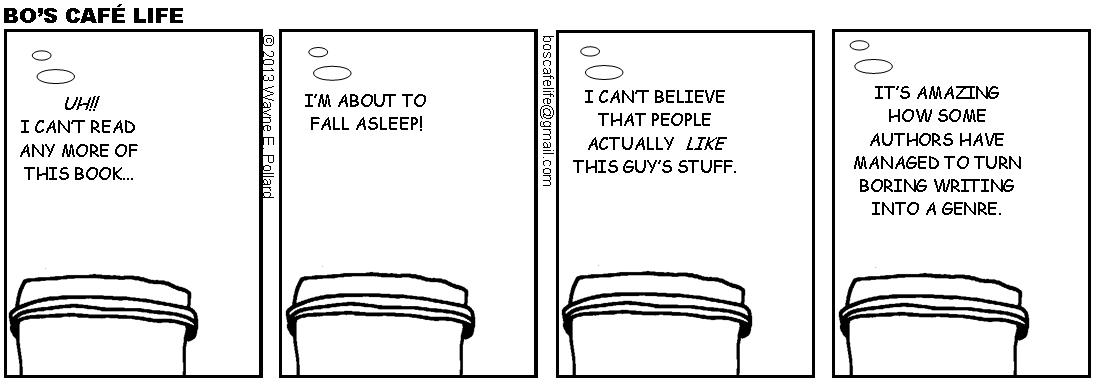
I really have to get over this somehow. Other people manage to read papers without falling asleep. Why can't I?
I have just returned from a very useful couple of talks about writing - how to discipline yourself, and how to make a good job of your thesis. Major take-home messages:
-Write little and often (I am going to write first thing in the morning, which will also enable me to car pool with late risers)
-Be regimented in your writing if it works for you (which it probably does)
-Make sure you have a sound structure
-You are the expert in your small field, teaching others about it, but...
-You're not trying to get a Nobel prize.
As useful as they were, the talks snared me with a line which I have heard many times: that your thesis (or manuscript, or proposal) should be "pleasant to read".
I have read a few theses. One was pleasant to read (mostly because it was really cool at a basic level - radio-tracking tarantulas!). The others were interesting, intellectual, and soporific. Scientific writing isn't really designed to be pleasant to read. You are trying to convey a tiny discovery to your reader, and everything about it - what we knew before your study, why you did your study, how you did your study, what your results were, how you interpret them, and where you think future research should be headed. This is not rippingly good stuff. It is functional. Other people can read it, interpret your study, replicate it or use your findings to support their own research. Science scrutinises the smallest crumbs of reality, which themselves seem meaningless, but together can be built into a bigger picture of the truth. The crumbs themselves are often rather dull. The bigger picture, reported in a scientific review, or on a blog, or in a piece of science journalism, sounds much more exciting.
I mentioned, at the end of the talks today, that I find scientific papers (and theses) dull to read (actually I find them extremely dull). People gasped, and disagreed. Surely I can't be alone in my lack of eagerness to read thick paragraphs of jargon, wandering around a single (often uninteresting but necessary) point. But maybe I am, or I don't have the intelligence to process sentences that are heavy with pointlessly pretentious words such as "utilise". One person suggested reading only the abstract, but I was taught as an undergrad that that is a heinous crime. Reading only the abstract does not enable you to judge the validity of the claims that the paper is making.
As a PhD student, I am not at the cutting edge of some profound, worldwide research initiative. I have a tiny project that involves measuring the diameters of trapdoor spider burrows, and hours of pipetting in a lab. My research will hopefully produce some evidence that supports either vicariance or dispersal as the major reason why Cantuaria show their current distribution. It will not prove or disprove the amount of land present during the Oligocene drowning period, but it will provide some evidence which may be combined with the current growing body of evidence to indicate how much land was there (and a few other things about NZ biota, spiders, and dispersal versus vicariance). There will be about seven different messages from my thesis which could be presented as bullet points, but I must also review current knowledge, and write about how and why I did things the way that I did, and how they can be interpreted and what people should be researching in the future.
I hope it will be pleasant to read!
Subscribe to:
Posts (Atom)